SWAMN logo — Intelligent Ocean Systems
SWAMN
Intelligent Ocean Systems

Cleaner oceans through intelligent systems

SWAMN is developing autonomous environmental systems that detect and collect floating plastic waste from water bodies — uniting AI-assisted monitoring, embedded engineering, and sustainable design.

Calm open ocean at sunrise
Autonomous
Self-navigating operation
AI-Assisted
Vision-based detection
Solar-Powered
Sustainable energy
Modular
Scalable by design
The Problem

Oceans are drowning in plastic

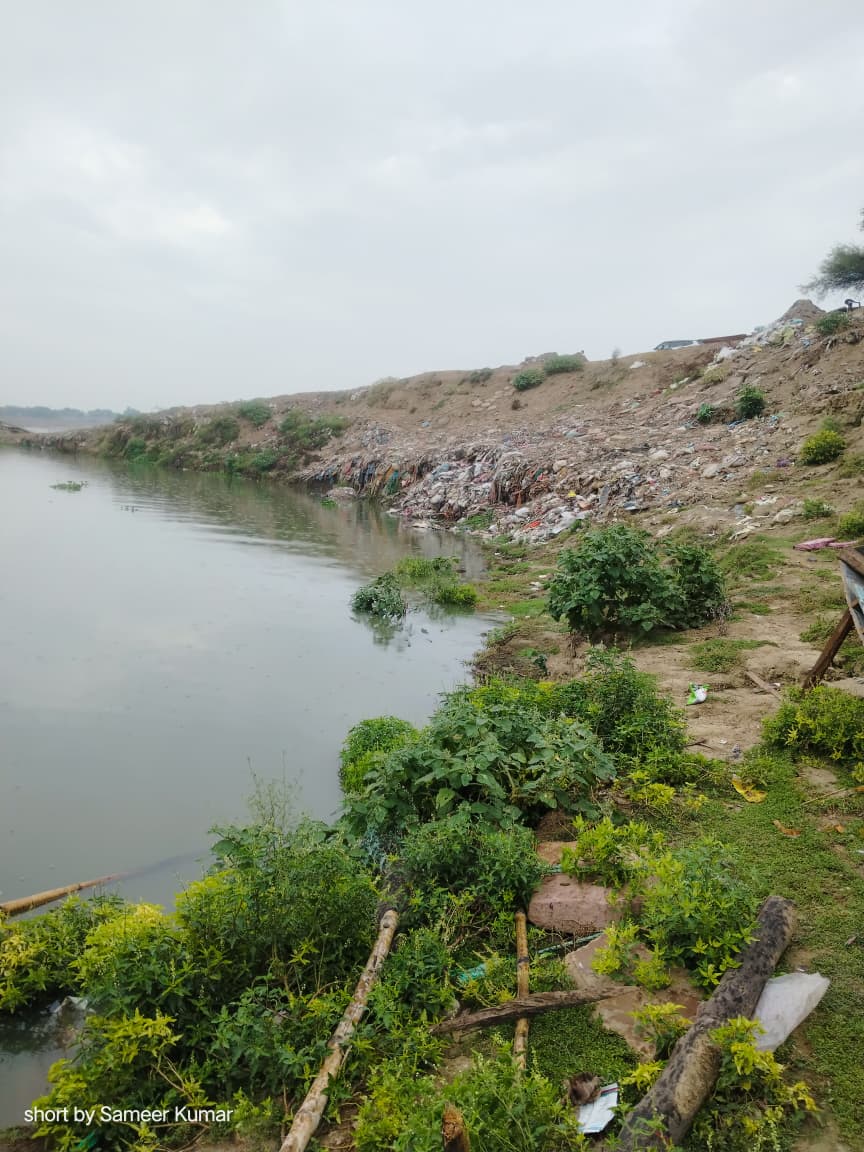
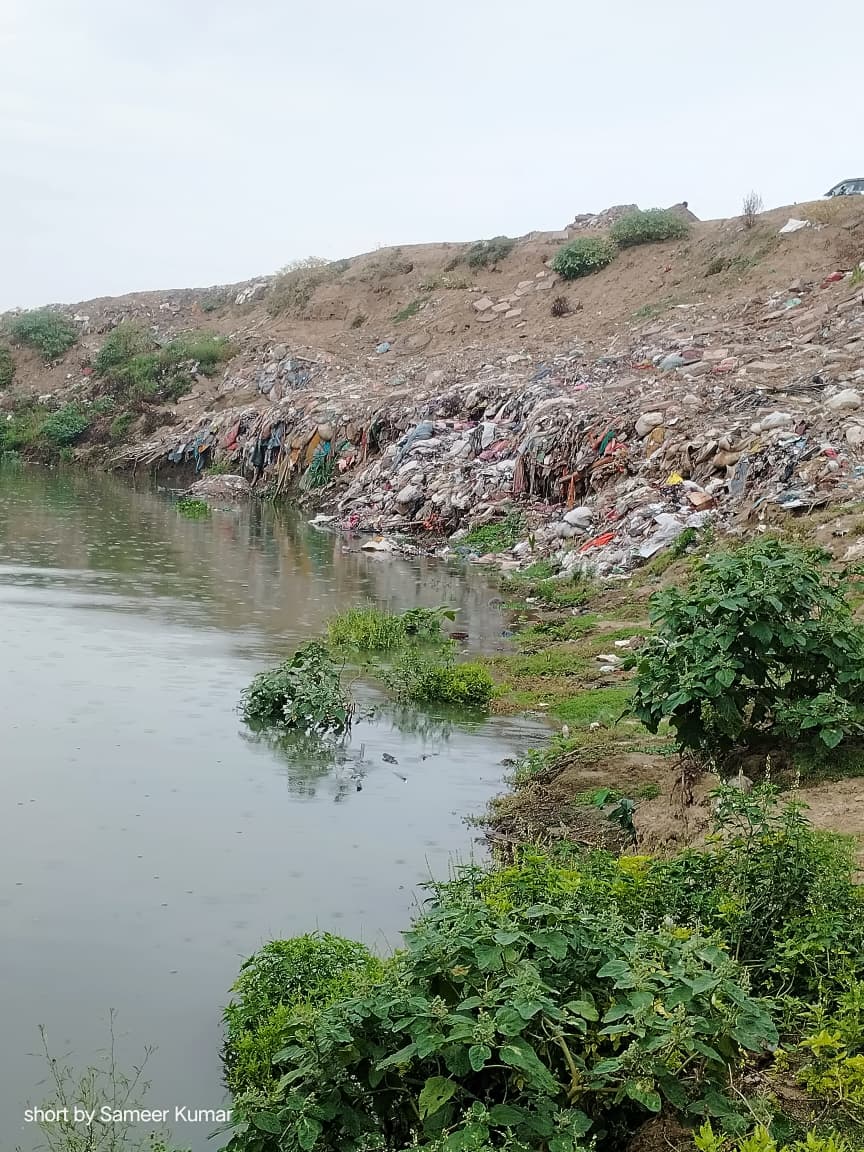
Every minute, the equivalent of a truckload of plastic enters our oceans. Marine ecosystems, biodiversity, and the water systems that sustain life are being silently degraded — and the scale demands intelligent, scalable response.

14M

Metric tonnes of plastic enter our oceans every year.

700+

Marine species threatened by plastic pollution.

88%

Of ocean surface contains traces of plastic debris.

1 in 3

Fish caught for human consumption contains microplastics.

Without scalable, autonomous cleanup systems, plastic accumulation will outpace marine life biomass within a generation. SWAMN exists to change that trajectory.
What is SWAMN

An autonomous ecosystem for cleaner waterways.

SWAMN is the Autonomous Marine Waste Aggregation and Retrieval Ecosystem — a specialised team of Aggregation Bots, self-sealing Containment Pods, and Retrieval Bots that work in coordination across rivers, harbours, urban lakes and flood-affected zones. Detection, containment and transport are split into separate roles so each unit stays lean and the fleet can operate 12-hour shifts.

Specialised
Three-role fleet
Continuous
12-hour operation
Circular
Waste-to-worth chain
The Ecosystem

A three-component cleanup ecosystem

SWAMN is not a single robot — it is a team. Detection, containment and transport are split across three specialised roles that work alongside each other, enabling continuous 12-hour operation without ever stopping to ferry waste back to shore.

01Detect & Contain

Aggregation Bot

An AI-powered surface vessel that patrols autonomously, identifies floating debris in real time, and deploys a U-shaped containment boom (50–60 m wide) from its rear chamber. It never carries waste — it herds, seals, and moves on.

  • RGB cameras + ultrasonic sensing
  • U-shaped hydrodynamic boom
  • Autonomous magnet sealing
02Self-Sealing Storage

Containment Pod

A buoyant U-shaped boom with a 0.5 m submerged skirt and no bottom — minimising drag and marine-life entanglement. High-strength neodymium magnets close the loop automatically once fill threshold is reached, turning it into a GPS-broadcasting floating pod.

  • Neodymium magnet self-closure
  • Open-bottom skirt for fauna safety
  • Zero propulsion, zero power
03Tow & Transport

Retrieval Bot

A solar-powered, catamaran-inspired vessel built purely for endurance towing. It homes in on a sealed pod's GPS beacon, docks via magnetic connectors, and tows it to the nearest recovery station — while Aggregation Bots keep cleaning, uninterrupted.

  • Catamaran hull, solar drive
  • GPS beacon homing
  • High-endurance towing
Workflow

From detection to collection

A single elegant loop powers every cleanup cycle — designed for reliability, efficiency, and uninterrupted environmental operation.

  1. 01

    Capture

    Continuous live visual monitoring of the surface.

  2. 02

    Detect

    Intelligent classification isolates plastic from noise.

  3. 03

    Navigate

    Coordinated movement converges toward the target.

  4. 04

    Collect

    Surface mechanism gathers the floating waste.

  5. 05

    Return

    Autonomous docking for offload and recharge.

Methodology

How SWAMN actually works

Six continuous stages that run quietly in the background — cleaning a waterway while the city around it sleeps, wakes, or goes about its day.

  1. Stage 01
    Patrol & Detection

    Aggregation Bots autonomously patrol assigned zones while onboard AI analyses live video and sensor data to locate elevated debris density.

  2. Stage 02
    Containment Deployment

    On detecting a hotspot, the bot deploys its U-shaped boom from the rear chamber, expanding 50–60 m wide across the surface.

  3. Stage 03
    Waste Aggregation

    Moving forward at low speed, the vessel uses hydrodynamic flow to passively funnel floating debris into the containment zone — no suction, no conveyors.

  4. Stage 04
    Autonomous Sealing

    Once fill level is reached, neodymium magnets at both ends connect automatically, sealing the boom into a self-contained floating pod.

  5. Stage 05
    Pod Release & Continued Ops

    The sealed pod is released and broadcasts its GPS position. The Aggregation Bot deploys a fresh boom and immediately resumes cleanup.

  6. Stage 06
    Retrieval & Transport

    A Retrieval Bot homes in on the pod's beacon, docks via magnetic connectors, and tows it to the nearest shore recovery or recycling station.

Commercial Viability & Impact

Built to actually pay for itself

Environmental projects fail for two reasons: they run out of money, or nobody wants to pay for them. SWAMN is engineered with both in mind — role separation drops unit cost, and what comes out of the water funds keeping it clean. Every step of the workflow is also a job for a local community member.

PET Plastic

Becomes rPET pellets for textile fibre and new packaging — ₹8,000–15,000 per tonne.

HDPE Plastic

Recycled into granules for pipes, buckets and furniture — ₹6,000–12,000 per tonne.

Coconut Shells

Converted into activated carbon for water filters and charcoal briquettes — ₹20,000–40,000 per tonne.

Ceremonial Flowers

Marigold and rose waste turned into natural dyes and vermicompost for organic farming.

Organic Matter

Anaerobic digestion produces biogas; remaining compost feeds urban farms.

Local Employment

Operators, sorters, recyclers and technicians — trainable in weeks, paid from the value the river itself produces.

Aligned with United Nations Sustainable Development Goals
SDG 14
Life Below Water

Direct reduction of floating plastic to protect aquatic biodiversity and food chains.

SDG 11
Sustainable Cities

Harbour and urban-lake cleanup supports liveable, healthy city environments.

SDG 13
Climate Action

Removing decomposing waste cuts methane emissions from aquatic environments.

SDG 09
Industry & Innovation

Scalable autonomous infrastructure for national waterway management.

SDG 12
Responsible Consumption

Recovered PET and HDPE feed back into a circular recycling economy.

Unit Economics

What each unit actually costs

Role separation keeps every unit lean — the pods need no power at all, which is where most of the cost savings come from.

River / Lake
Aggregation Bot
₹60k–70k
Per unit at prototype scale
Ocean Variant
Aggregation Bot
₹2 Lakh
Ruggedised for open-water ops
Passive Unit
Containment Pod
₹3k–5k
No motor · No battery · Passive
Algae Removal & Recycling

The same architecture, tuned for algal blooms

SWAMN wasn't originally designed with algae in mind — but the core collection mechanism is already most of the way there. A few targeted upgrades turn the fleet into a bloom-harvesting platform without a new vehicle.

The problem at scale

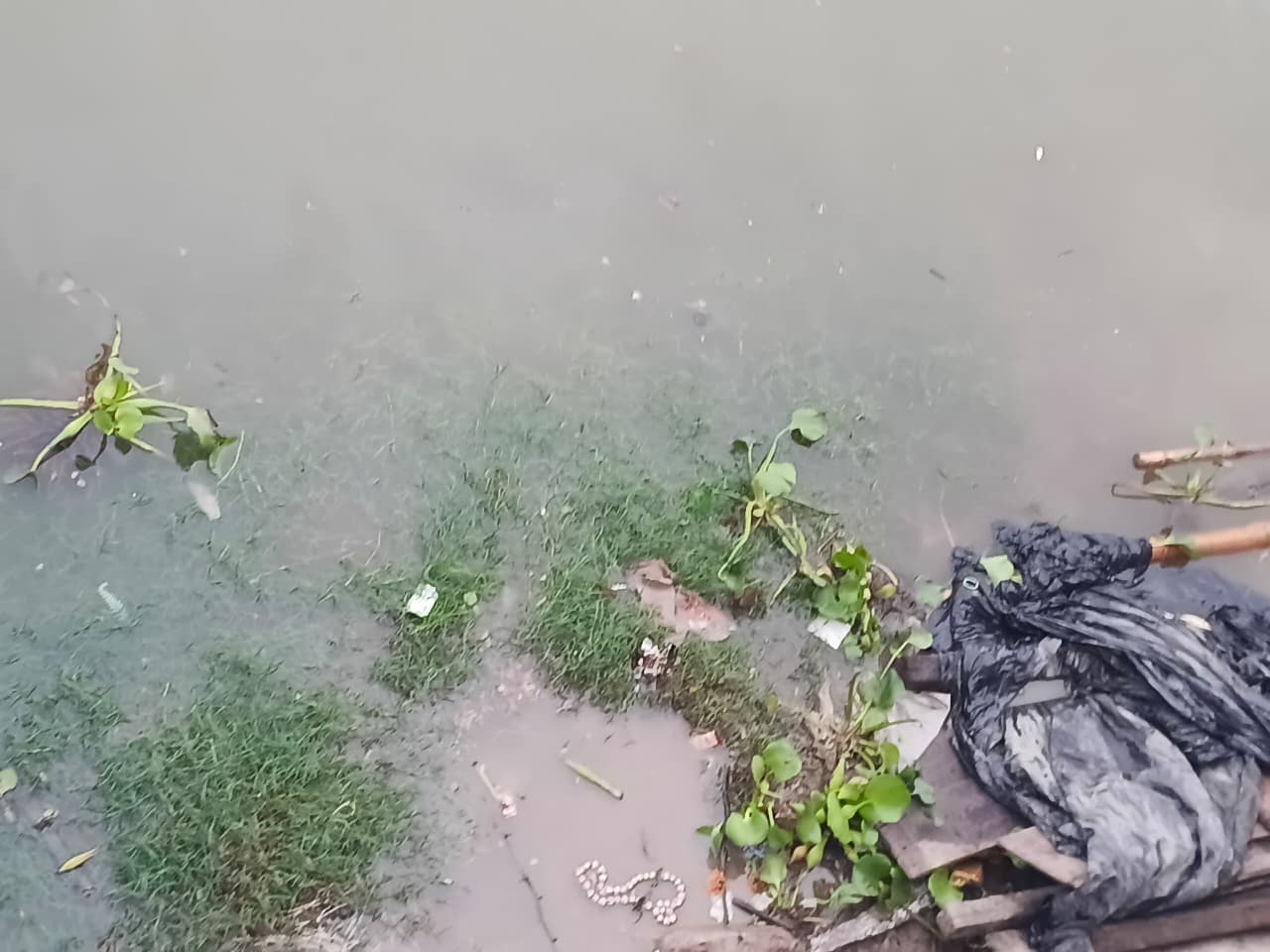
Dissolved-oxygen collapse and fish kills. Cyanotoxins lethal to livestock and dangerous in drinking water. Sunlight blocked from submerged plants. Methane and CO₂ from decomposing mats. Tourism, fisheries and waterfront livelihoods all degraded.

Dal Lake, KashmirHussain Sagar, HyderabadPowai Lake, MumbaiBellandur Lake, Bengaluru
Adaptation 01

Fine-mesh skirt

Standard skirt replaced with 0.5–1 mm fine-mesh, adjustable to 0.3–0.8 m depth to match bloom layer thickness — captures algae biomass while letting water drain.

Adaptation 02

Hyperspectral AI detection

Optical sensors trained on algae spectral signatures distinguish toxic cyanobacteria from benign algae and aquatic plants, enabling species-specific targeting.

Adaptation 03

Algae-specific sealed pod

Enclosed pod with mesh floor and airtight cover; HDPE-lined interior resists cyanotoxin leaching during transit to shore.

Adaptation 04

GPS bloom density mapping

AI maps bloom density and extent in real time, building heatmaps that direct fleet routing for maximum removal per kWh.

Onboard AI classifies bloom toxicity before collection. Pods arrive tagged hazardous or safe. Workers handling cyanobacteria use PPE and trained protocols. Every batch of digester effluent is pH-tested before going anywhere near farmland.

Challenges & Mitigations

Honest about what we haven't solved yet

Every engineering project has problems it has not fully solved, and SWAMN is no different. Here are the known risks and the design choices being built to address them.

Challenge

Large-scale boom deployment in waves

Risk

Boom twist, tangle or asymmetric expansion in rough water

Mitigation

Anti-twist spool systems; segmented flexible boom design

Challenge

Autonomous sealing reliability

Risk

Neodymium magnets misaligning under cross-currents

Mitigation

Hybrid sealing — magnet plus mechanical latch backup; wave-damped hull

Challenge

Marine-life safety

Risk

Skirt entanglement risk for aquatic fauna

Mitigation

Open-bottom skirt; AI-based obstacle detection with automated abort

Challenge

Energy supply in overcast conditions

Risk

Solar output insufficient for round-the-clock operation

Mitigation

High-capacity battery buffers; reduced-function low-power mode

Challenge

Communication range in remote zones

Risk

Loss of coordination signal between units

Mitigation

LoRa long-range mesh with store-and-forward; autonomous fallback patrol

Development Roadmap

A three-phase path from prototype to fleet

Each phase builds directly on validated results from the previous. Timelines measured from current prototype state (May 2026).

Phase 1
0–6 months · by Nov 2026

Core Mechanism Validation

  • Validate boom deployment and 50–60 m expansion in still water
  • Test neodymium-magnet sealing reliability across current conditions
  • Verify ESP32-S3-CAM fill-level detection and seal-trigger accuracy
  • Demonstrate pod release and GPS beacon broadcast
  • Complete first controlled waterway trial
Phase 2
6–12 months · by May 2027

AI Navigation & Autonomous Operation

  • YOLO-based debris detection integrated with autonomous patrol routing
  • GPS + IMU navigation with ultrasonic obstacle avoidance
  • LoRa mesh communication between Aggregation and Retrieval Bots
  • Fully unmanned 8+ hour continuous operation in field conditions
  • Solar charging validated for zero-fuel-cost ops
Phase 3
12–18 months · by Nov 2027

Multi-Unit Fleet Deployment

  • Coordinated swarm of 3+ Aggregation Bots and 1 Retrieval Bot
  • Target environments: rivers, urban lakes, harbours
  • Integration with municipal IoT and Smart Cities platforms
  • Local employment and waste-sorting supply chain established
  • Pilot recycling revenue with kabaadiwala and SHG partners
Patent Filed
Autonomous Deployable Semi-Submerged Floating Waste Aggregation and Closure System for Marine Debris
Application No. 202611064509Filed 21 May 2026Docket No. 70488
Recognition

Recognition & achievements

Validated, recognized, and supported by India's leading innovation ecosystems.

Milestone

Selected among 1.5 lakh student innovations at IIT Guwahati

Milestone

Registered participant for IIT Delhi innovation competition

Milestone

INSPIRE Awards — District Level Recognition

Milestone

Self-initiated student innovation — independently designed and built

Milestone

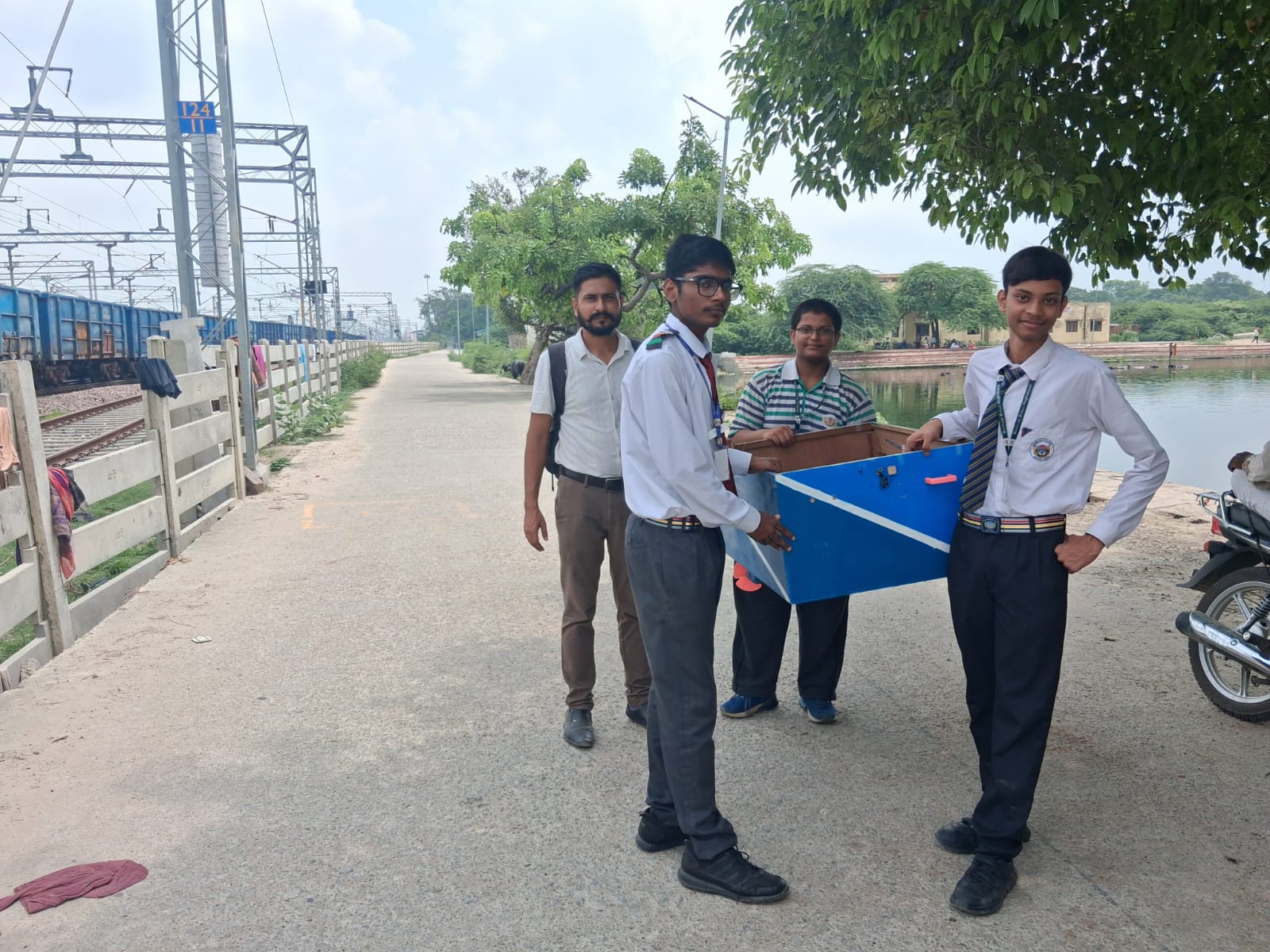
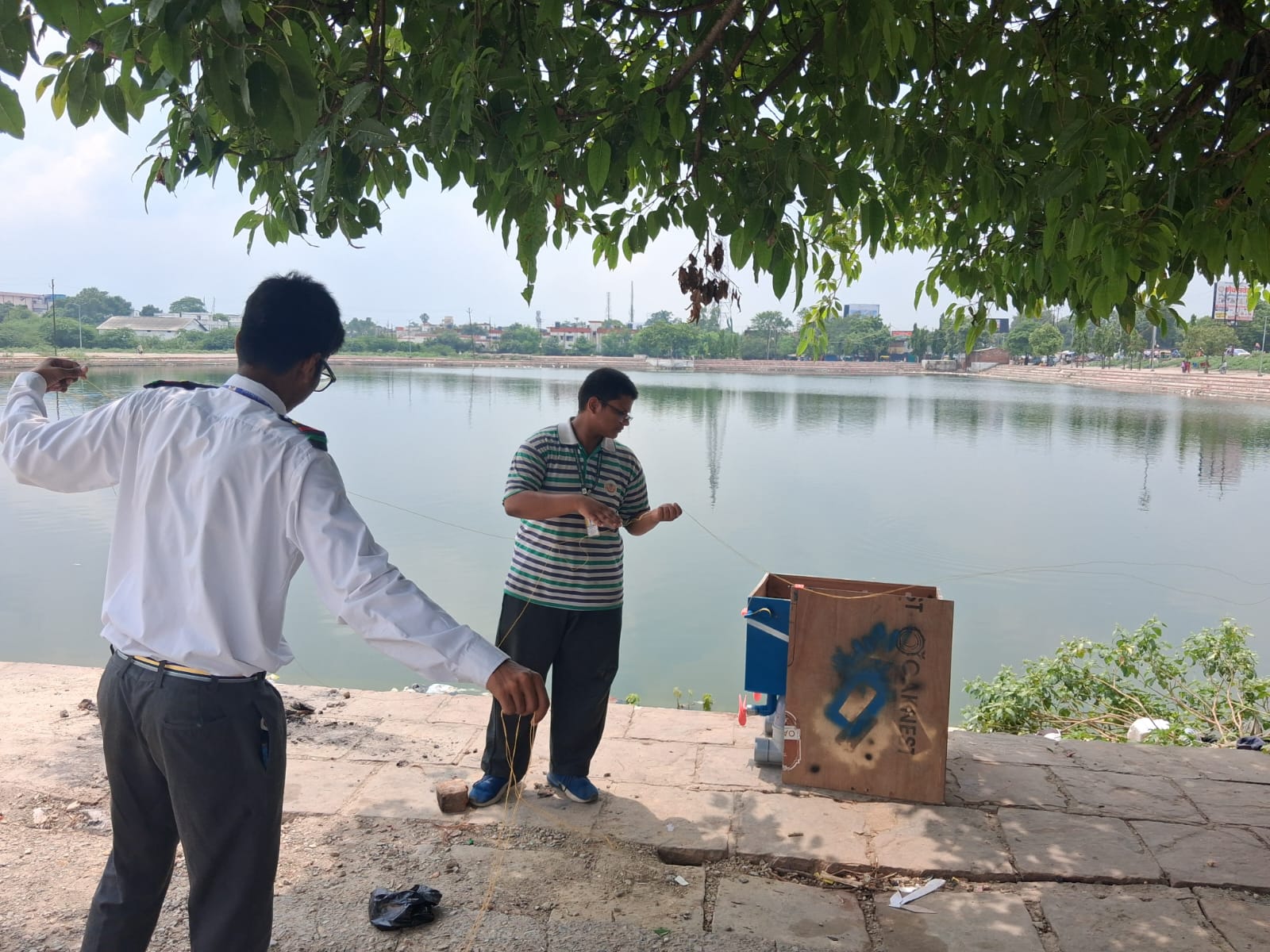
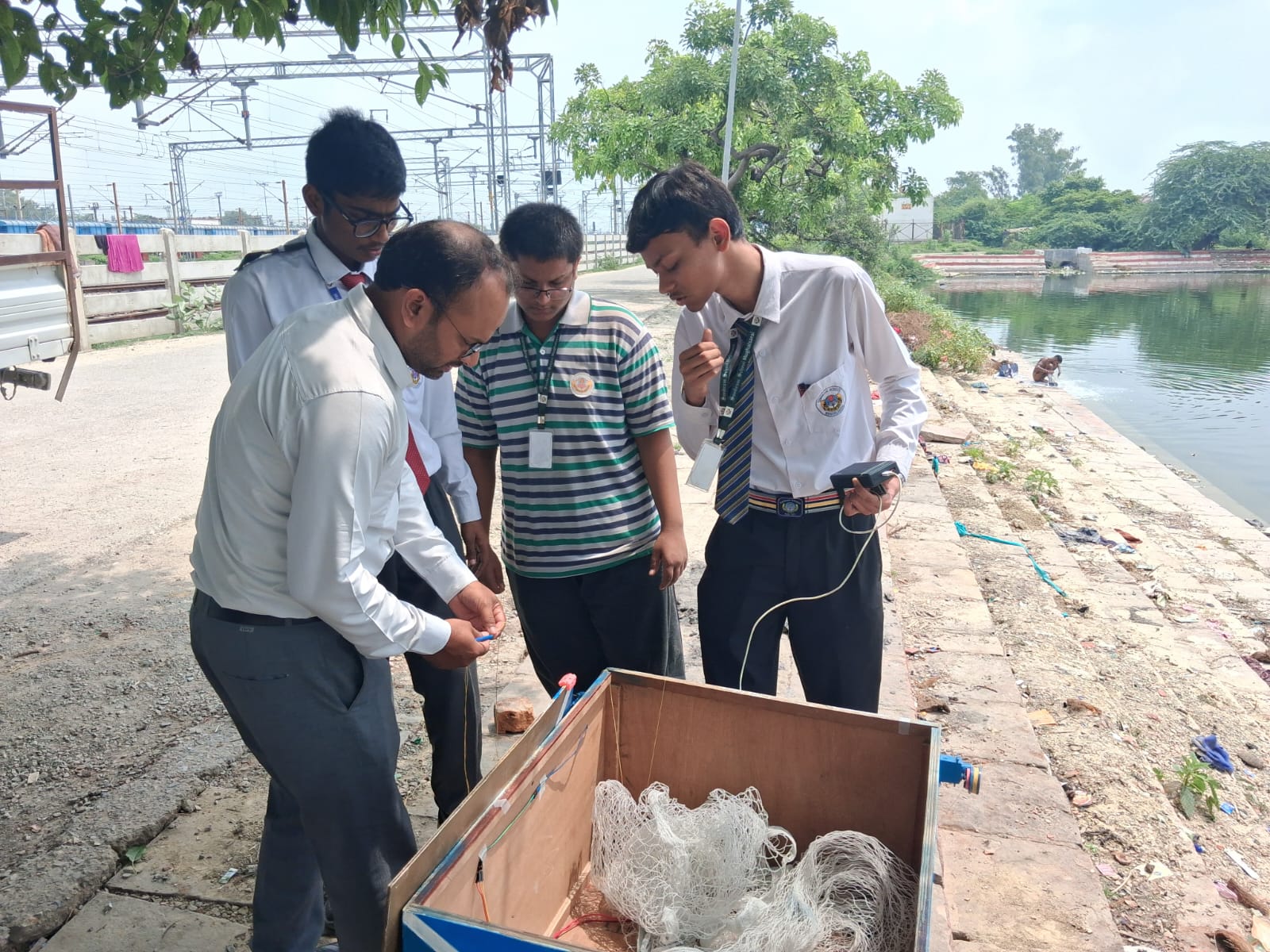
Autonomous cleanup prototype successfully demonstrated

Team

The minds behind SWAMN

A young team of innovators building the next generation of autonomous environmental systems.

Rishi Singh
Lead Innovator · Bot & Dock Designer

Leads the technical vision of SWAMN — designs the autonomous bot and docking model, and drives AI, embedded systems, and end-to-end engineering.

rishisingh@swamn.com
Vaibhav Raj
Electronics, Mechanics and Website · Systems & Web

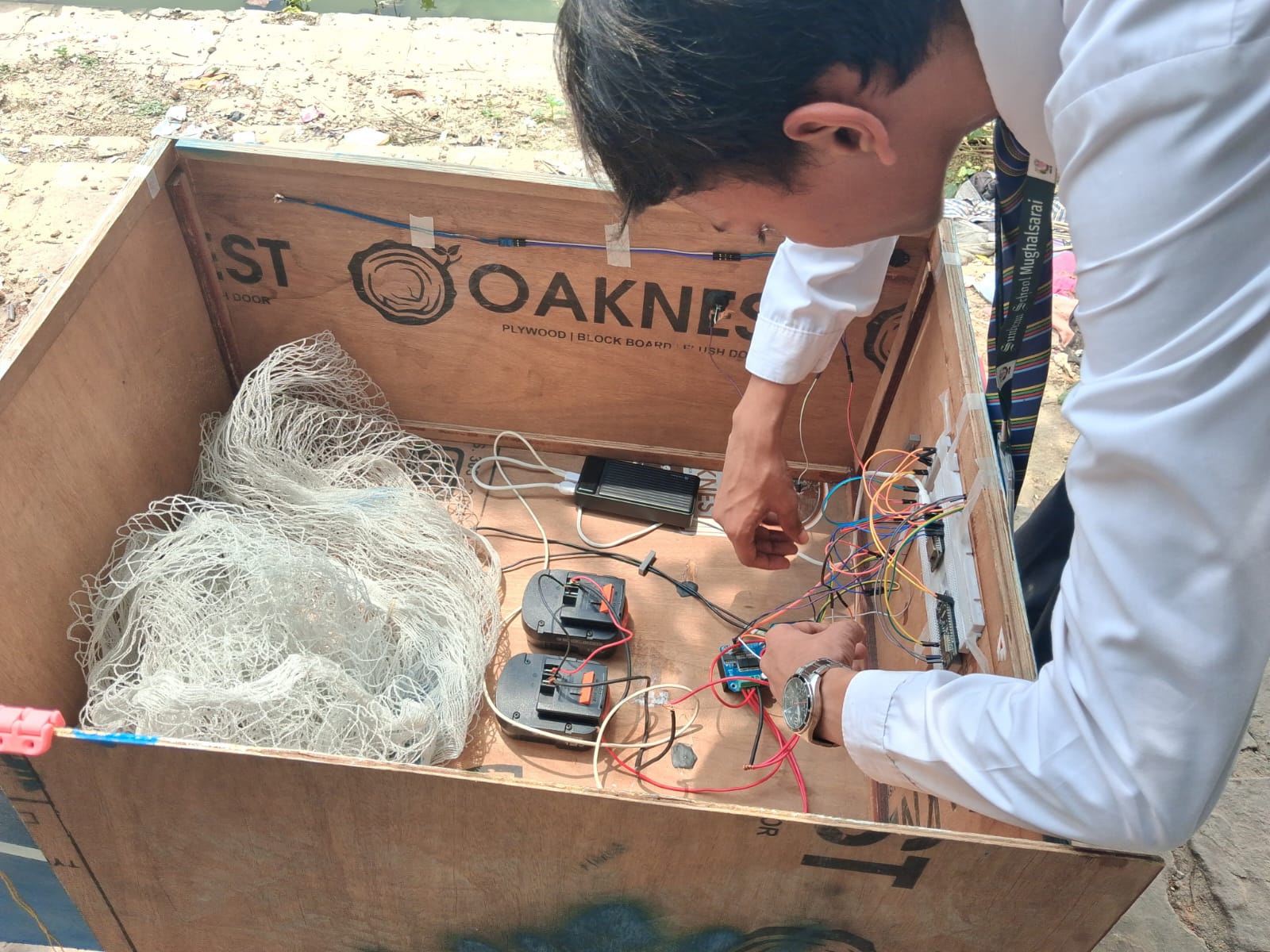
Builds and wires the electronics behind the bot — power, sensors, and control boards — handles the mechanical assembly, and designs and maintains the SWAMN website.

AK
Aayush Kumar Singh
Branding, Media & Communications · Identity & Outreach

Shapes SWAMN's visual identity, social presence, and digital communications — building a strong, premium identity for the initiative.

Manan
Mechatronics and Documentation · Integration & Records

Brings the mechanical and electronic sides together during build and testing, and keeps every design decision, test run, and result properly documented for the team.

Adarsh Kumar
Team Management and HR · People & Operations

Coordinates day-to-day operations and people management at SWAMN — ensuring smooth collaboration, clear ownership, and steady progress across every workstream.

SK
Satvik
Pitch Handler · Narrative & Presentation

Owns SWAMN's pitch end-to-end — shapes the narrative, builds the deck, and delivers it. Translates complex engineering and real-world impact into a clear, persuasive story that resonates with judges, partners, and investors.

Annapurna
Pitching and Presentation

Leads people operations at SWAMN — onboarding, team coordination, and culture. Keeps the team aligned, motivated, and moving in sync, ensuring every member has the clarity and support they need to do their best work.

Future Scope

Where the platform goes next

The same architecture extends well beyond plastic. Each direction below is a natural adaptation of the deployable boom, the autonomous closure mechanism, and the floating-pod logistics model.

Direction 01

Oil Spill Containment

The containment pod mechanism can be adapted with absorbent boom materials for oil and chemical spill response in coastal waters.

Direction 02

Algae Bloom Harvesting

Modified skirt depth and AI detection models enable targeted removal of surface algal blooms in freshwater lakes.

Direction 03

Underwater Debris Extension

Future bot variants may combine surface collection with shallow underwater debris retrieval arms.

Direction 04

International Deployment

Directly applicable to river systems and coastal zones across South & Southeast Asia, Africa and Latin America.

Direction 05

Environmental Research Platform

Sensor arrays on deployed units can monitor water quality, temperature, pH and microplastic density — feeding live data to research databases.

Join SWAMN

Be part of a cleaner tomorrow.

SWAMN is building intelligent systems for cleaner, smarter, and more sustainable aquatic ecosystems. The mission is open — collaborators welcome.

FAQ

Frequently asked

Quick answers about SWAMN, the team, and how to get involved.